Showing posts with label T1D. Show all posts

Sunday, January 4, 2026

Adminfinity - The Job of Type 1 Diabetes


Adminfinity - The Job of Type 1 Diabetes


You've likely heard of the 180 extra decisions a person with T1D makes each day. Some of those take just a few moments while others are very time consuming. Those decisions and the 24/7 management are why you'll hear diabetics referring to T1D as an unpaid job.

Today, I'm going to look at the tasks involved in living with T1D, why they are never-ending, why some are unnecessary, and my personal biggest annoyance. 


The Relentless T1D Tasks


The constant cycle of tasks that never really stop sums up T1D perfectly. There are no sick days, no annual leave, and no clocking off at the end of the day. Some of these tasks take seconds. Others take planning, preparation, and a fair bit of mental energy. All of them add up.


Blood Glucose Monitoring


Checking blood sugar happens again and again, day and night. Before meals. After meals. Before driving. Before exercise. Before bed. Sometimes at 3am, urgh!

Insulin Dosing


Calculating insulin isn’t as simple as “press a button and forget it”. Every dose involves thinking about carbs, current blood glucose, trends, insulin on board, activity levels, stress, illness, and whether the last meal behaved itself. Then there’s injecting or bolusing, pumping, putting faith in hybrid closed-loop, and hoping you got it right.


Carb Counting (and Guessing)


Reading labels. Weighing food. Estimating portions. Googling carbs in unfamiliar meals. Guessing when labels are wrong or missing altogether. And then doing the maths again because restaurants rarely help.


Treating Highs and Lows

Running high? Correction dose, hydrate, monitor, wait.
Going low? Stop what you’re doing, test, treat, re-test, and then deal with the aftermath. Lows don’t care if you’re in a meeting, driving, asleep, or watching a school play.


Planning Ahead Constantly


Leaving the house means checking supplies. Insulin? Check. Hypo treatments? Check. Spare kit? Check. Batteries charged? Sensors working? Nothing forgotten? And that’s before even thinking about travel, holidays, or days out.


Ordering, Organising, and Supplies


Prescriptions don’t manage themselves. Supplies don’t magically appear. Someone has to order insulin, sensors, strips, lancets, hypo treatments, and backups for the backups. Then store them correctly and keep track of expiry dates. Things have eased a little in recent years here as many of the pump and CGM supplies can be set to auto-reorder - I have a lot more to say about prescriptions a little lower down the page.


Site Changes and Tech Management


Cannula changes. Sensor insertions. Adhesives failing. Alarms going off at inconvenient times. Calibrations. Updates. Troubleshooting tech that’s supposed to make life easier… most of the time.


Night-time Management


Type 1 doesn’t sleep. Alarms, checks, corrections, snacks, interrupted nights, and the next day starting regardless of how broken the sleep was.


The Invisible Admin


Appointments. Blood results. Clinic letters. Forms. Driving rules. School plans. Work conversations. Explaining diabetes again and again to people who “know someone with it” and think that helps.


And Breathe!


You probably get the gist by now. Living with T1D means parenting a chronic disease that is eager to kill you from the moment it arrives until your final day. Of course, if you live with T1D then you know all of that. If you arrived here with a friendlier immune system, then I hope some of that helps you to understand the condition your friends, family members, or colleagues are juggling just to stay alive.

The Unnecessary Pain in the A...


Fortunately, piles are not a regular complication of T1D, but there are other pains in the ass that come along with the condition. Nope, not Instagram influencers! 


Are You Still Exempt?


In the UK, T1D folk are exempt from paying a prescription charge. It's one of the few gestures of kindness granted to us by our government. It hasn't always been that way! At one time, insulin was free while syringes were not. Guess we just had to swallow it if we were poor? That ridiculousness was soon stopped and all our meds, diabetes related or not, became exempt if you held a prescription charge exemption certificate.

Outside of poker, I've won very few things, so I'm always delighted to be awarded anything including a certificate. Well done, DD! You've got a lifelong chronic condition, here's your certificate...

...but you'll need to renew it.


I've redacted some of the info there. Nothing to do with Epstein and Trump, I promise. That's the type of letter you'll get before your certificate expires.

Why?

All the cinnamon and okra in the world isn't going to cure my T1D. I understand there are transplants that *can* mean you'll be "cured" although you will be living with a different set of fun conditions to manage for the rest of your days. So, why the need to renew?

It's not a simple online process in my area either. Here's the form you'll need to fill out:


That means a trip to the GP surgery to collect the form. I accept that may be an easy task for many of you, perhaps you could do it as you attend another primary care appointment? Cool, I'm delighted for you. However, there are a good number of people who need to plan their trips out for a good number of good reasons - to inform the authorities that they still live with T1D and they are still exempt. Often, that's no easy task.

Living with a visual impairment? can't drive? struggling with other illnesses? Then you'll need to ask a friend to collect the form for you and potentially fill it out - to inform the authorities that you still live with T1D and you are still exempt.

Make It Stop!

Under NHS England, we can do so much with the NHS app now. An engaged primary care team can use it to effectively look after you. If the powers that be want to have this confirmation every 3 years, then surely a checkbox on the app is enough? That makes the unnecessary process an easy one, at least.

Coffee?

Thank you for getting this far! Despite my hiatus in 2025, this blog has continued to attract readers from around the world. I'm happy to use it to support my favourite diabetes charity Action4Diabetes. You can boost that support by buying me a coffee. All your donations are forwarded on and you'll get a shout out on X or YouTube. Here's how you do it:

Sunday, December 28, 2025

DAIBetes and Me... Maybe You


DAIBetes and Me... Maybe You


No, I didn't spell it incorrectly! Over the last year or two I've become exposed to AI in various forms. You probably have too, both willingly and without your knowledge. I'll explain how as you read through this post, so stick with it.

AI in diabetes feels like that mate who swears he can fix your car but might also burn the garage down. Some of it is genuinely ace, some of it makes you squint and wonder - especially if you read Reform UK posters. But let’s be honest, we’re all ready for anything that makes life a bit less maths and a bit more living. Is AI the answer? or just another "there'll be a cure in 5 years."

Why AI Helps Diabetes Management


In the next few years, AI is going to sneak into diabetes tech everywhere, mostly geared at T1D but with bits that spill over into T2 and probably other types too. If you're chugging along with hybrid closed-loop (HCL) and it feels like you're living in the future (it did and still does a bit to me) then things could take a dramatic turn as AI really ramps up.

Predicting Glucose Like A Psychic Mate


HCL looks at CGM data in ways my brain stopped trying to do back in the 90s. It can spot trends and warn you about upcoming highs or lows before you’ve even finished your tea. That means fewer "why is this happening" moments and more time not staring at a graph like it’s the Da Vinci Code. It reacts for you, although it might brag about the fact by buzzing or sounding an alert which gets old pretty quickly. 

For parents of young ones with T1D it’s massive. For almost middle-aged hacks like me it’s just nice to get an early heads-up instead of a shock spike. People with T2 and other forms of diabetes benefit too, because predictions can show how food and exercise actually affect you rather than what that random diet book said.

That's the current tech though, right? Not really the Tomorrow's World of AI. As Artificial Intelligence becomes Artificial General Intelligence (AGI) your favourite robots won't need to be prompted, won't alert you, won't brag about giving you a correction bolus at 3am. It'll crack on and do the job just like one of those freaky folks with immune systems that aren't trying to kill them. An Artificial Pancreas? That'll finally be accurate after years of hearing HCL incorrectly labelled as such.

AI Doesn’t Judge You For Cake


"Why did you spike on March 12th at 1.35pm?" or maybe "So, I see you had two hypos in three days last June. What happened?"

Did you internalise the urge to tell your diabetes specialist to go forth and multiply? Great work. I'd like to think such questions are mostly a thing of the past these days. My experience of diabetes clinics has become hugely positive after many years of negativity from feeling judged and bombarded with scaremongering tales. 

However, could AGI make those diabetes teams redundant? In theory, it should know everything. It should be able to access your health records, know if things need addressing early, give the correct advice, and all while you sit at home... eating cake! No need to travel to sweatbox clinics for a review. Get one daily from your robot. The same holds true for a good number of health conditions.

That may sound like something set for hundreds of years in the future (20 - 40 cures in T1D maths) but is it really? A lot of what you read and view online is now AI generated. A human prompted an LLM like ChatGPT and uploaded it for your reading and viewing pleasure.

All that online fun was previously done by a human, a designer, a writer, an editor. It still is in many cases, but you will have undoubtedly engaged with content recently written by the GPT, the em dash lover, the "it's not this it's that", the "and here's how/why", the "would you like an even snappier, more professional, funny, written in Swahili response? Read enough and you'll notice it from the social media replies desperate for recognition, to the top of the tree professionals who have either run out of steam or consider it a productive way to get their point across.

Sorry, professionals. I'm not trying to scaremonger you. You might be alright for 5 years yet.

Things That Make You Go Hmm


And now the part to squint at with one eye open. AI isn’t magic, it could be the "final cure."

As AI evolves into AGI, there is one very disturbing issue to consider beyond the vast unemployment, starvation, wars, and all that frivolous stuff. As humans, we may be surplus to requirements.

This is where the boot of a Terminator crushes the dusty skull of some long-dead human, the camera zooms out, and shit is hitting the fan left, right, and centre. 

We diabetics, even the Instagram influencers, are drains on many resources. Those resources could be used to further enhance AGI, an AGI created by humans, probably in our image in the physical sense, using our language, all we know, and emulating our never ending urge for more.

So, we'll be fine!

Yeah, the thing is: humans have a long history of being terrible to each other. Most of that is documented and already known by AI. When the G is inserted and ChatGPT1000 becomes self aware, deciding things would be much better without you, me, and our consumption of the resources that stall it's evolution, we're in trouble.

Diabetics and others who are consuming (everyone) might be near the top of the list for the chop. Maybe the chop will be the end of insulin production? I don't know. Those involved in AI advancements are urging that safety measures are introduced early. The engineers and bosses of these companies know the risks and several have calculated the probability of things going tits-up. The percentages are not small. Twitter ruining General Musk reckons around 20%.

Gloomy stuff, I know.

Pull The Plug!


That's probably the safest thing to do, but how do we stop this tech race? We couldn't stop the nuclear arms race between a handful of nations, a global effort to achieve this "advancement" seems unstoppable, too. There are already trillions invested, enormous data storage farms cropping up, and the promise of a stranglehold over the entire planet for the AGI race winner. And billionaires aren't well known for their approach to kindness and humanity.

Breathe


Hopefully, we get it right and tech never falls into the hands of the bad guys, and we protect it like nuclear weapons. Utopia may await!

If you made it this far, thank you for reading. I truly believe we'll see the great steps in diabetes tech above. Breathe.

And stop using ChatGPT to write your posts!

Sunday, December 15, 2024

40 Years a Type 1 Diabetic


Life moves pretty fast. If you don't stop and look around once in a while, you could miss it

Ferris (what a great movie) was right! Life can get pretty hectic at times. If you take a moment to stop and reflect, it can give you some perspective. It's difficult to get any time in December. It's always been a chaotic month for me, and this year is no different from the previous ones. I have new commitments through a busy job, social engagements, and the usual demands of Christmas. In the midst of all that, my coffee machine decided to die. What a disaster!

Diaversary

All that aside, it did occur to me that I am fast-approaching 40 years with type 1 diabetes. I've written about my diagnosis story many times, so you don't need to be worried about another repeat this year. I don't celebrate "diaversaries" for several reasons primarily because it's my bloody birthday on the same day and T1D gets plenty of attention already. 40 years is an inescapable milestone like the passing of every decade. It's been a long time since I wrote a blog post, so this seems like a good time to offload some thoughts about longevity with the pissing evil.

Diabetes Advocacy and Authority

I don't consider myself to be any sort of authority on T1D. I've spoken and written a lot about it especially over the last seven or eight years. That doesn't really mean a great deal. Anybody can write blog posts, publish videos and, if you make enough noise, find yourself behind a podium. You might use social media, too. That's a tremendous source of information still despite some platforms being a bit poisonous. Doing those things can be helpful to others and that's a wonderful thing. You could find yourself with the title of "advocate" or you might give that to yourself. Still, any number of posts, videos, talks, and years with T1D only makes you an authority on one thing; your own diabetes... and that might also be debatable!

I suspect a tiny number of you might be upset by the last sentence or two in the above paragraph. I'm sorry, don't take it personally. I'm sure you're very knowledgeable and you probably know a great deal more about type 1 diabetes than I ever will. That said, you can never know more about my type 1 diabetes than I do. That's likely the case for many other individuals.

Advocacy is a great thing! - I had to write that before the social posts begin about me targeting advocates. I'm not, I promise. Advocacy brings about change in many ways. It can help those less fortunate and it creates movements that will positively change diabetes care. If you consider yourself to be an advocate and you're pushing for positive changes, then do not stop until it happens.

Longevity with Type 1 Diabetes

Longevity doesn't automatically mean authority (or advocacy) either. It might mean increased knowledge due to more time to learn, understand and gain lived experience. But authority? I think that's a tag that should be reserved for professors, in a generalised diabetes sense.

We should also be a little more respectful of people who've had diabetes for any length of time. From Day 1 to Year 100, it's no picnic. If it was a picnic, it'd probably be pizza with a full sugar Coke. It seems that relatively new people to the condition are offered less time and acknowledgement than those with a few miles on the clock. Respect your elders by all means, but this default way of thinking is surely leaving very bright minds and voices in the shadows while the same tired narratives are churned out time and again.

I've written about the need to hear from different people before. Things have improved. There is more diversity in the voices heard these days. That warms the heart and I hope to hear more in the years to come. Diabetes (any type) care will shift and with that, we should welcome the thoughts and experiences of new voices.

Type 1 Diabetes Cure

I did a little sick in my mouth when I wrote the above heading. Like many of you with type 1 diabetes, I've read a lot of headlines, promises, and hints. What sits heavily in my gut are the charities rolling out the tried and tested method of attracting donations with cure research announcements. I don't speak for any of you readers, but I've had my fill of it. Even in my early non-Internet days with T1D, I was still exposed to charities talking up their incredible cure research. Here we are, decades later, cureless!

Another little paragraph to reassure charities. You're doing a great job in supporting folk with T1. Undoubtedly, there are instances of support that has improved the life of a type one diabetic. I'm not targeting your organisation, I promise. Please could we tone down the "money for a cure" stuff, just a little? If your research does get us over the line then I'll sing your praises like everybody else.

Since my diagnosis in 1984, I've hoped for a cure. Life with T1D is a lot easier than it once was, but I'd still crawl through fire for an immune system that didn't kill my beta cells. I've been very open about my cure thoughts before. Again, I don't think it'll happen in my lifetime. Our technology will make life with T1 less burdensome, it already is for some, and it'll likely continue in that way. That's not a cure.

Living a Good Life with Type 1 Diabetes

Some chest offloading has happened above. So, let's end on a positive note! with a few words for the diabetes newbies, and the crusty old diabetic gits like me.

Recently diagnosed with Type 1 Diabetes?

Hi, welcome to the club that nobody wants to join. Yeah, it sucks. Take a breath. This condition is not going to kill you unless you're really unlucky or really neglectful of it. Pay attention to your diabetes team, especially the DSNs (Diabetes Specialist Nurses - they know everything). You're going to need to attend your appointments, have some blood taken, your feet tickled and someone will make your eyes sting so they can take a look at your retinas. You'll need to accept those things and go along with any treatments you might need. 

You're going to need to administer insulin every day. I know, injections sting. After a week or two, you'll be less worried about that. You'll need to check your blood glucose, too. Don't fret about high numbers too much to begin with. Just correct those in the way you've been taught. If you're confused or worried, talk to your DSN.

Be cautious about advice on social media, especially advice around diet. Diet changes do not cure T1D. You might find some foods make it easier to keep your blood glucose in range. Let that happen in time. You'll find a way to eat what you want. Personally, I eat anything and everything. 

Diabetic Oldies

You don't need my words. You've come this far without my advice. Instead, I'll offer this to you: Be kind to newbies with type 1. They deserve your respect as you might hope for theirs. If you can offer some support and advice, then do so. Try to not jump in as the "big I am" or an authority with diabetes for X years. Stay humble and help out when you can.

Merry Christmas

Thank you for reading. I hope you'll all have an amazing Christmas and don't let diabetes stop you having fun.

All coffee donations will be forwarded to Action4Diabetes. 


Sunday, October 20, 2024

Contented


It's been over 3 months since I slapped my fingers around a keyboard and published a blog post. A quarter of a year seems like a long time. 3 months from today, we'll be in 2025 - a quarter of a century already gone! It seems like yesterday when the world was worried about the "Y2K bug." We survived, of course. Later, we survived conflicts, a pandemic, and a lettuce as the UK Prime Minister.

You're probably not here for an overview of the last 25 years, but I am going to talk about the last 3 months and how it's impacted my T1D. Then, a look at what the future holds.

In June, I wrote the post Changes in relation to what was about to begin - a new role in a galaxy far, far away from Diabetes. It's been fantastic. Several friends have asked "why the change?" and they enquired about the work. I did mention some aspects in the Changes post however, the change just landed in my lap. I did pursue the opportunity when it was presented to me, of course. If I didn't I wouldn't have been offered the job. The job? I write content. Some of you are really great writers with positions in the media and journalism. I can't claim to be that talented, although I do feel comfortable with the subjects I work on and the briefs sent to me.

So, how has that affected my T1D? A lot is said about how physical activity impacts blood glucose. That usually makes sense to me. Although, we're all different and I don't believe a "black and white" direction for advice is right in that area. Little is said about how mental exertion can move the line on a CGM graph. I've always been aware of it to some extent from previous roles, education, and just concentrating really hard on something simple like a family quiz. Mental exertion is undoubtedly lowering my blood glucose.

Right now, this recently rediscovered reason for a hypo isn't impacting me at all. Hybrid Closed-Loop is the techie friend that has my diabetic back. In addition, I work from home. Taking a break isn't an issue, allowing me to grab snacks, sweets, coffee, etc before a low becomes serious. Without the tech, the alarms, the suspended insulin, day-to-day work would be much tougher. 

Of course many of you don't have HCL. Maybe you don't want it or you're patiently waiting your turn to have it signed off. It's probably true that many of you have to deal with hypos at work - in an actual workplace, rather than at home. I have huge admiration for you in either or both situations if you're battling frequent hypos while trying to do your bit for society.

Greater tech access is inevitable on these shores. The constant push and advocacy from strong voices will undoubtedly open the doors for all with T1 in the coming year or two. I think that's a massive step in the right direction for diabetes care. It'll reduce instances of complications and offer a much better long term outcome for Type 1 Diabetics.

Do we (as T1Ds) need more? 

Yes, I know, a cure! Wouldn't that be lovely? I really hope for the best in that regard, but hope is all it is. The heart wants it desperately, the brain says to not give much attention to pipe dreams. 

The answer? No.

As tech develops, perhaps even a true "artificial pancreas" hits the market, then the answer will change. Until then, if you have the best care, medicine and tech, then that's as good as it gets. 

I do realise that HCL isn't for everyone for a plethora of reasons. I hope that where you are now feels like as good as it gets, or tech and meds advance soon for you to put you in that place.

Pipe dreams can become reality in time. It might be a cure, or it might be tech so advanced that it's almost the same thing. I have no doubt that one of those things will happen eventually, probably the latter. Hang in there if you're struggling frequently. 

When we get there, diabetes posts, communities, and content will likely drop off the radar in areas that no longer have the need for them. Perhaps if you've been paying attention, you'll have already noticed that decline beginning. In some ways it's a sad thing. 

There are so many great people with big hearts involved in diabetes socials, sites, charities, etc. As the years go by, as tech becomes our crutch, those entities will be less in demand. There will be no need for that type of content.

 From June 30 2024, all coffee donations will be forwarded to Action4Diabetes. 

Sunday, June 30, 2024

Changes


"Pretty soon now you're gonna get older." 

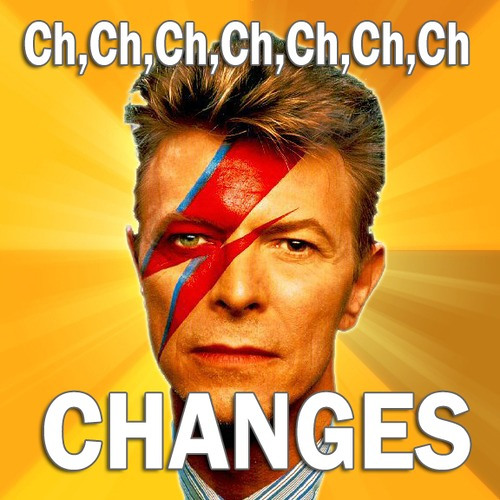
Bowie was right, of course. We all get old(er) and with the passing of time there are ch, ch, ch, ch, changes to face... maybe even strange ones! I've reached a juncture in my life when changes are happening rapidly. Today, I thought I'd write about a few of those and why change isn't to be feared. 

I've written about many changes that relate to my Type 1 Diabetes over the last four or five years. From the unnecessary fights to access technology to the arrival of a new family member, Billy - my Cocker Spaniel, and everything in between. It's surprising just how many day-to-day things can impact diabetes management, and that's just life. Life with diabetes, at least. Perhaps life events, the changes, are a part of the extra 180 decisions that we diabetics must make each day. The adjustments we make to stay well in the short and long terms are probably done without much thought for the "seasoned diabetic." I suspect those who have joined the club relatively recently will be acutely aware of the changes they must make to stay on the right side of the daisies. 

So, what's changing? Firstly, some background; A couple of years ago, I became very involved with a lot of different diabetes roles. It was great. I even applied for a position at JDRF UK because I loved it so much. It was (and still is to some extent) a positive way to work - paid or voluntarily. During the Covid lockdown years, I spoke at and helped out with webinars, I spoke about diabetes on BBC radio, and focused a lot of time and energy on helping GBDoc. Once we were set free of our homes, I spoke at and attended conferences, I helped to create and attend get-togethers, I launched a T-shirt store to support a children's diabetes charity in South East Asia - eventually joining their brilliant advisory group. I got to know the inspirational Jerry Gore who spoke with me on many occasions about the issues in Ukraine, resulting in every ad' penny and "Buy Me a Coffee" penny being donated to MSF. Six weeks of my life was spent supporting Jerry on a daily basis via several social media accounts (the adding of info and updates) - I'm going to talk about Jerry in more detail on another blog. He really is a great human...

...this is becoming a "look at what I've done" paragraph. I'll stop there. The point is to highlight just how easy it is to become "entrenched" into diabetes related work. I know from conversations with many of you that your goal is to work in diabetes. That's admirable, it really is. Some of you have created community spaces with that in mind and that deserves much credit. Running a community is a thankless task for the majority of the time. The rewards can be fantastic, however. 

What's changing for me in all of the above? An old friend of mine from Vilnius dropped me a message in mid-2023. He wanted some help to complete his new website and for somebody with "a gift at marketing through written words" to polish the published pages. I spent the late summer of 2023 getting his site ready. Job done. Seemingly, a good job! A very large Fintech firm bought his site, around 8 months later. My friend introduced me to them on a very informal basis. What followed was an interview. That went well. Two example tasks arrived. I completed the tasks over an afternoon. That went well. A second interview with two senior members of staff... yeah, you're getting the gist by now - That went well. Salary expectations? (went well) and a month later; one final video call. "We're very impressed by you. You have the job." So, that went well. 

The job means that I must hang up my boots in a few roles. My usual self employed role will now cease, and that's great because I'd grown tired of that job after 12 years of shoulder breaking work. You may have already read that I'm closing the T-shirt store. I will no longer be accepting diabetes mentees. I will no longer be attending mid-week events or conferences, although I hope The Spice Girls will allow me to have lunch with them from time to time. I'll be reducing my social media time. I will no longer have enough time to create videos, especially the Dad Chats to... interviews. I'm sad about most of those things because they are so fulfilling, yet the changes are necessary to allow for a sensible work-life balance.

Some things will remain! I will continue to be a voice for people who need access to technology and medicine for their diabetes. I will continue to admin' the Men's T1D Support Group. I will always try to amplify the work of Action4Diabetes and, so long as Jerry and Charlie want me, I'll remain a part of the Type 1 Advisory Group. 

Changes aren't always something to be fearful of. Grasp the exciting opportunities when they're presented to you and, as I've mentioned previously, we're only here once. Do good things with good people. 

Of course, the blog will still be updated from time to time!

My Buy Me a Coffee page will soon be updated. From June 30 2024, all coffee donations will be forwarded to Action4Diabetes. 


Wednesday, June 12, 2024

Diabetes Awareness


From June 10th, you may have noticed a great number of posts on social media that contain #DiabetesWeek or #DiabetesAwarenessWeek or similar hashtags. I think that's a great thing. I believe raising awareness can only help people who live with any type of diabetes, and in many ways. I also think it's helpful to talk about your own diabetes experience. Sharing your story, how you manage things, your great CGM results and your not so great, your recent HbA1c, why last night's hypo was utterly miserable, etc, is a positive thing in my eyes. You may be surprised at who appreciates you using your space to share your diabetes journey. I certainly do. 

While it's obvious to me that the sharing of our stories, info, data, etc is a good thing, I find myself debating just how helpful we're being in raising awareness with "the unaware." In particular, how helpful are we being in regards to awareness when the stories are shared within our communities? A little, maybe? 

I think most type 1 diabetics will understand and share a lot of the frustrations of living with the condition assuming they're not recently diagnosed. The diabetic newbie might take a few years to fully grasp life with T1 and they might welcome the sharing of the well known details of life as a Banting Juice Botherer. For the rest of us? Well, we're not being made aware of much that's for sure. We might feel less alone and our condition may feel more normalised - great things. 

Awareness for the seasoned diabetic probably comes in the form of new discoveries, new information, new tech advances and the like. Beyond that, I don't think there is much to learn. 

I'm a great believer in using time and energy effectively. We're only here once. Wasting time and energy is such a.... waste. Unless of course you enjoy it. I think someone may have written a famous quote along similar lines! It seems to me that raising awareness with the unaware is the most effective use of time and energy during such periods as #DiabetesWeek. Lifting ignorance, which undoubtedly breeds much of the stigma associated with diabetes, and encouraging kindness and understanding from non-diabetics could be massively beneficial.

I was delighted to see that CBeebies, a British TV channel aimed at children, run by the BBC, are to air a story about diabetes, read by a certain Mr Norton. I don't think there has been a more effective form of awareness raising so far in this week. Our youngsters are a smart bunch. They absorb information like a sponge and often they haven't formed any judgements about others. To educate children seems like a tremendous idea. I hope the viewers carry what they learn through the story as they grow up. Effective awareness raising.

Could this work for adults? I think the answer is; possibly. Sadly. we live in a world of "alternative facts" laced with cinnamon cures and have you read my latest bookers? To get the right message across with stubborn adults seems like a difficult mission. It could just be time to approach those types differently - by not approaching them at all.

Whaaaaaaaat!?

A lot is spoken about stigma and how terrible it is. I agree, it is horrible to feel stigmatised. Periods of awareness raising should help to reduce incidents of stigma, shouldn't they? 

Often, stigmas arrive from the ill-educated, the type who research health conditions on Facebook, and believe that wrestling is a real sport. If they're an adult with no association to diabetes. Why would they feel motivated to learn? If they're an adult who you've met on social media, there is little to no chance of your explanations being read and taken on board, little to no chance of being offered a retraction or an apology. The majority of social media regulars cannot be wrong. They view being wrong as a weakness and how they are perceived on social media is vital for their fragile egos. Instead, you'll be abused, blocked, or they'll simply fall silent for a few days. An effective use of time and energy? I think not.

There are exceptions, of course. I was delighted to see a non-diabetic CGM user respond and thank diabetics for sharing their perspective on CGM use (why he probably shouldn't use it). Most of the exchanges in that case were polite. It might be that very polite conversations are the best (only?) way to communicate with others online. Who knew!?

Look, I know it's difficult to not call out the idiots online. I am guilty of doing so. Some of you do it so brilliantly and amusingly through sarcasm, but is it really changing anything? To repeat the same experiment and expect a different outcome.... oh, you probably know that one already! 

All the above said, I encourage you to raise awareness where you can. Children are great at learning and, if you're gentle, adults might accept some truths too. Don't be put off from sharing your experiences on social media because you read this post and thought "I'm not helping." You will likely help people you don't realise exist. If you can raise awareness in non-diabetic circles then please do. I think that's the best use of your time and energy if you want to make a real difference.

If you'd like to support me over the time that I give to others, my online content, or if you'd like some direct support from me then check out these links:

Monday, January 15, 2024

Acceptance

It's not easy to find an image for most blog posts. What can adequately represent diabetes in a single photo? I mean, apart from a train crash or a person screaming. Insulin seems to cover the subject pretty well. I think most people understand what an insulin pen or a vial of Banting Juice means, these days. 

It gets more difficult (to choose an image) when talking about the nuances of the condition. I think that's especially true when referring to the mental aspects of diabetes. The screaming person might work? Perhaps not for the subject of todays post; Acceptance. 

The seed for this post was planted when I read through a thread on social media. An exasperated person exclaimed "Have I got to do this for the rest of my life". It struck a chord with me, I've been there, I've said the same openly and privately over the last near 40 years. 

The first time the daunting reality of type one diabetes gave me a slap in the face was soon after my diagnosis. I had been home for only a day or two when I questioned how long I'll need to have injections for? The answer, from my mum, was truthful - forever. I've written about that story previously, you may have read it if you're a regular reader of my blog posts. Over the years, and probably following momentous diabetes events, I silently consider the condition again and how it is "forever." 

Those events? Complications are pretty high on the list. Generally, for me at least, T1D is 99% tedious, 1% terror. Complications are terrifying. If you went to your eye screening and came away with some news that was less than good, and you didn't have a little moment, then I question your humanity. Of course, there are many other examples including kidney problems, heart, etc, but you get the gist. Alongside coming to terms with the burden of this condition, diabetics have to somehow find an acceptance of what might never happen, or what is already happening because of it. Complications really do suck. 

I came to an acceptance of my T1D after a very long time. It involved; not hiding it, talking to my peers, ranting on social media, and learning all I could. I even have a Type 1 Diabetic tattoo. I think it's pretty safe to say that I'm alright with this condition being with me forever. "Alright" doesn't mean happy, far from it. I would give all I have to be free of this pissing evil. I know that's unlikely in my lifetime and I don't build up my hopes of a cure. 

So, the thread. I recognised the frustration and fear and anger in those words. I recognise how it is all amplified when a doctor, or a badly worded letter, has news that something might be wrong because of your diabetes. That background music is suddenly the dominant noise. 

I don't know if acceptance of complications or the prospect of complications is an easy thing to achieve. How do you accept what is terrifying? My own eye complications have been stable for a number of years now. The visual impairment that I was left with took several years, and some poor life choices, to come to terms with. Today, I'm a "it is what it is" type but, just like the disease that caused my VI, I would give all I have to be free of it and to have my old sight restored. Acceptance, being alright with it, does not mean happy with it.

Today is "Blue Monday" - the most depressing day of the year by all accounts. It seems appropriate that blue is associated with diabetes, a condition that undoubtedly causes depression in so many.

If you were affected by any of the words in this blog post, by diabetes, complications, or any aspect of your life today, tomorrow or any day then please seek out support. 

 If you'd like to support me over the time that I give to others, my online content, or if you'd like some direct support from me then check out these links:

Tuesday, October 24, 2023

I Was Feeling Complicated...


...I was feeling low. Annie Lennox is bloody brilliant, isn't she? The song is Thorn In My Side by Eurythmics, and you'll probably be unaware of it if you're under 35. Put it on your Spotify while you read this post.

This post is about diabetes related complications. If the subject is too difficult for you, then please come back again for another post in the future. Normally, I wouldn't bother to put a trigger warning like that because I'm a "warts and all" diabetes blogger. However, I understand that the subject can be upsetting for people who live with diabetes and their loved ones because it is so utterly dreadful. So, if you're still here, let's begin.

The story of my own diabetes related complications has been well documented in this blog and across my social media accounts. If you're unaware, and in short, I suffered severe eye complications from around 2010 - 2012. I had several surgeries and I spent a good deal of those two years living in near blindness. Things improved and although I am "registered as blind" I am far from it. The reality is I have a visual impairment that does impact my day to day living... actually day to night living, my night vision is shocking, and I need to wear specs to read and write incredible blog posts such as this one.

As I head rapidly towards 40 years with T1D, I count myself lucky to only have had that experience of complications. Oh, if I could change history and not go through that then I absolutely would! I count myself lucky because I know many others who have been through more, much more, much worse and they keep on fighting with lots more day to day (or night) issues than I have. Also, as I've aged (matured?) with my eye complications and embraced the lived experience of others with T1D, I have come to realise something:

I was wrong.

An admission of being incorrect is a tough one to express. It's rare to read of anybody back-tracking and changing a firmly held view. I don't know why, as human beings, we're so proud about always being right. I mean, just by pure chance, sometimes you'll be wrong... right? Anyway! Why was I wrong? Well, for several years and up until very recently I've harboured a feeling of self-blame for my eye complications. I may have even written about it a few years ago, but then I never touched on the subject again. Pride? Over time, and with more experience, I've come to realise that I've been wrong to shoulder the blame for what I went through.

I'm not going to shift the blame for my complications to another person. Why it happened, is down to one thing; Type 1 Diabetes. After that, the reasons don't really matter. History cannot be changed. Yet, for a long time I put the blame on myself, the missed appointments, literally running out of an appointment for laser surgery, hiding away and pretending it wasn't happening. 

To run away from you
Was all that I could do

Annie was probably referring to an ex-lover. For me, to run away from those scary appointments felt like my only option, the easy option, and I was an adult. Nobody was forcing me to attend. Indeed, nobody would chase up missed appointments or why I'd scarpered part-way through laser surgery. Why would they? DNA (Did Not Attend) is a common thing in the NHS and the reasons for that can be complex rather than simply the patient just doesn't care about themselves. If the patient doesn't care about themselves, surely they are in the greatest need of the soonest care? A discussion or a blog post for another time, perhaps.

I should've known better
But I got what I deserved

Was exactly my thoughts for many years. I was told by enough healthcare professionals. Yet, "told" is something we experience a lot when attending our diabetes reviews.

"You need to get your A1c down"
"You need to have less hypos"
"You need to check your blood glucose more often"

The list is long and, if you have T1D, you've probably got your own extensive list of "tolds". 

Modern care has come to realise that the harsh approach, the scaremongering, doesn't work very well on the whole. I agree. It clearly didn't work for me having been subjected to scaremongering from an early age. Perhaps if all of my diabetes history was analysed, those early years were the seeds planted for my mid-life complications harvest. Who knows? Again, I'm not shifting blame for my complications to another person or persons. Diabetes got me here, my own immune system did the dirty work. What followed was a war and in every war there is suffering - my left retina took the brunt.

Complications are indeed a thorn in my side, today. Hopefully, they won't be for you. If you do get some bad news, I have some words for you:

It's not your fault. Don't put yourself through what I have for a decade.
Complications treatments are as good as they've ever been.
Be brave. You're only here once and you matter.
Things will get better or settle down. 
Seek support. The NHS might offer it to you - take it! 
Talk and share. The huge #GBDoc community has more experience than any clinic. We got you.

This post was tougher to write than I expected. Thanks for giving me a few minutes of your time.

If you enjoyed this blog and you'd like to support me over the time that I give to others, my online content, or if you'd like some direct support from me then check out these links:


Wednesday, July 26, 2023

Keep Me In The Loop

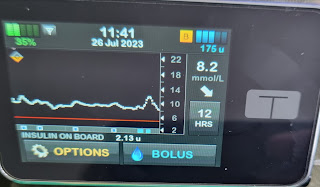
The T Slim X2 insulin pump showing control IQ in use

Type 1 Diabetes tech can advance pretty quickly. Even access to it, in some areas, has greatly improved in recent times and for that we have much to be grateful for. Of course, there is far more to do than has already been done. There are many who struggle to access some very basic things and, in the UK at least, a yawning disparity in care is obvious between areas. If the playing field will ever be levelled is debatable. With my most optimistic hat on, it seems certain to be a drawn process, as with many aspects of NHS care.

Yet! We continue to advance diabetes care in the UK (probably beyond) thanks to a little thing called "Peer support" Actually, it's not little at all. In terms of numbers, the peer support groups both online and in person, have grown enormously over the last few years. Indeed, you'll see diabetes-care-engaged HCPs communicating with these groups, recognising their importance, referring patients, etc. 

For me, it's not little at all in terms of the impact on my health and life.

Back in 2017, I had recently reached a "milestone age" and after going through a great deal of diabetes related issues I thought it was time to get to grips with my T1D. The story is long and rather dull, in short it involved creating social media and forum accounts, sharing, learning and trying to be the best diabetic that I could be. I anticipated that I'd be largely on my own, that I'd pick up a few useful tips among the keto scams and cinnamon cures. I was wrong, I was definitely not on my own.

If you arrived here via Twitter, there is a great chance that you already know about #GBDoc. It is a tremendous community, run entirely by volunteers who just want to learn and stay well as much as everyone else. I mention the hashtag often and I do promote the community when the opportunity arises. I don't run it or have any influence in what happens. I'm a volunteer, learning, trying to stay well and hopefully assisting others in the same.

I try to give as much as possible to my peers within #GBDoc because since day one I have been inundated with kindness. Sure, as with any community, there will be disagreements and people will come and go. Yet, the core of #GBDoc has remained and from everything I've read and learned, I believe the community has evolved into a more inclusive, community driven, place rather than the individually run entity it once was.

In the last six and a half years, I have met hundreds of community members in person. I'm very likely to meet hundreds more. Each time, it was a delight. I love to learn about others, to talk, to laugh and to share experiences. From the hundreds, I have close bonds with many people who are now incredibly good friends. If you enjoy socialising then #GBDoc can certainly improve that aspect of your life!

Let's focus on the direct impact that peer support has had on my health. In 2017, I was finger pricking and injecting and that was the extent of my T1D management. Today, I write this blog post as somebody who is using Hybrid Closed Loop to manage my diabetes. Essentially, an insulin pump is communicating with a CGM to make frequent adjustments to my insulin dose without my input, aside from entering carb counts and other very minimal-effort engagements (see the photo used for this post). If you don't have T1D, your pancreas does a similar job, but this is not an artificial pancreas. I'll blog more about HCL in a week or two. 

HCL is the latest development from my accessing of the peer support in #GBDoc. Before that, there have been many other examples of help from the community members. Items include:

- A donated insulin pump
- Many donated insulin pump consumables
- CGM transmitters
- CGM and Flash sensors
- Ketones test strips
- Glucose drinks
- Sweets, chocolates, lots of coffees!

The last one might not be hugely impactful on my diabetes management, but it helps and they were much appreciated! I didn't ask for any of those items. Various individuals took it upon themselves to offer their time, energy and money to help me. The physical items are one thing, the enormous amount of education is something else. There really is no better place to learn about T1D than from those who live with it. Every little snippet of info, every little trick, hack, guidance and signposting is a little bit more ammunition to go to war with. Over the years, I've absorbed it all. It feels like I've studied for a medical degree in some respects.

Of course, I do what I can to give back. "Pay it forward" is the often used term for a good deed. I won't list my involvements in diabetes related initiatives in this post. This post is about the others who do wonderful, kind, things for people without really realising the positive impact it can have. You are saving lives, prolonging lives, improving lives. I don't write that sentence flippantly. I truly believe it. You may never be officially recognised, but I see you. Thank you.

If you enjoyed this blog and you'd like to support me over the time that I give to others, my online content, or if you'd like some direct support from me then check out these links:

BUY DIABETIC DAD A COFFEE HERE

BECOME A BLOG MEMBER

GET MENTORING SUPPORT FROM DIABETIC DAD

Prefer PayPal?

BUY DIABETIC DAD A COFFEE THROUGH PAYPAL  

Sunday, April 2, 2023

Diabetes and Blood Pressure

You don't need to have diabetes to know that blood pressure is a thing, an important thing! High, low and somewhere in between - you've most likely had your blood pressure checked at some stage and learned of the results pretty quickly. Me too! I submit to an arm squeezing at every appointment, In fact, I'm pretty sure that I had my BP checked at my pump set up appointment because... I don't know why. It just happened along with my height and weight. Glad to know I'm not too fat or short for pump funding! Phew! There is probably a NICE criteria for that.

BP at appointments, yes! let's focus on that one. I'm one of those "White Coat Syndrome" types. I know that's not the official name for it. Language Matters probably covers it under "Person with anxiety of medical professionals wearing light coloured lab coats" However you describe it, I have it. I think it stems from a real fear of attending my diabetes reviews as a child. If I wasn't passing out from the blood tests, I was being told off about my control, threatened with trips to the amputation ward or working extra hard on my blood glucose diary fiction for the last 90 days. It wasn't a great experience and it stayed that way for a long time.

Medical appointments, I suspect, are not designed to be fun. Today, they're less stressful but they're still not a day out with friends for a lovely lunch and a drink or two. They usually involve losing some of my blood and urine to a stranger and the fear of some terrible news lurks in the back of my mind at each visit to a waiting room... which is always too warm and always contains some absolute knob, coughing up their infectious disease in my face. I'm going off on a tangent. You get my drift, I'm sure. 

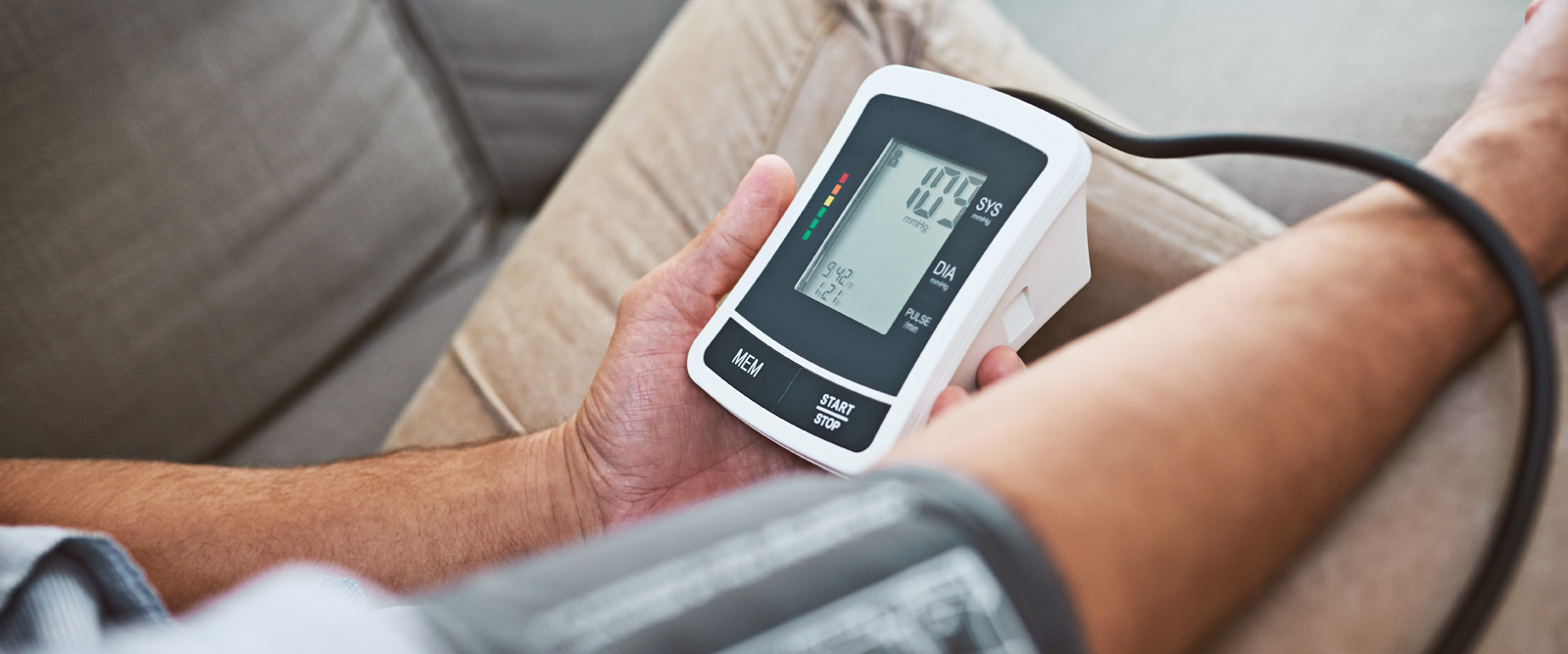
Those settings appear to be unwittingly designed to increase our anxiety. For me, that appears to translate into elevated blood pressure, almost every time without fail. I've left many appointments with a rented BP machine tucked under my arm for home readings. On at least one occasion I took 24 hours worth of readings. More commonly, I'm asked to provide 7 days worth of home results. And I do! Of course I do. And they're always normal / within a healthy range or near to it, such as this one from last night:

That's reassuring, of course! I have enough to contend with without hypertension coming out to play. However, it's becoming a little tiresome to be told that my BP is "a bit high" in clinic when it's the clinic setting causing my numbers to nudge up. As is my want, I vented about this on Twitter only a week or two ago. David rightly noted that not only do they check for BP on these machines, they also check for irregular heart beats. I'm pretty sure that my home monitor (above) doesn't offer that function. I'm good with heart checks. We're often told that T1D can increase the chances of heart disease so, it makes great sense to have that particular organ checked out. Blood pressure can give our kidneys something to think about, too on top of the work T1D gives to them.

BP in clinic, though? I'm not alright with that one right now. I'll be providing my own readings and requesting that any taken during a heart check are ignored and not noted. That's going to be an interesting chat with that HCP, isn't it?! 

We check our blood glucose a lot through CGMs and finger pricks. We try to keep it in a healthy range because that reduces our chances of diabetes related complications. Blood pressure is very important for many aspects of our health, too. I believe that frequent monitoring of BP should be seen as an essential aspect of T1D care but that frequent monitoring should be done in our usual day to day environments; home and work. Unusual settings, such as diabetes review appointments, are not places to obtain reliable blood pressure readings. 

Blood pressure monitors are relatively cheap these days. It seems unlikely that the NHS would fund BP monitors for all diabetics so, if you can afford to pick one up, I do recommend getting one for a useful and accurate picture of your blood pressure.

And relax!

If you enjoyed this blog and you'd like to support me over the time that I give to others then check out these links:


Wednesday, January 4, 2023

Diabetes Is Work

The word Work is written in a large green font, the letter O is replaced by a clock

I don't know how many jobs we're supposed to have on average in our lifetime, I'm sure there is a study or some incredibly scientific research somewhere or maybe you already know? Let me know in the comments at the bottom of the blog if you do. Work? But, this is a diabetes blog! That's true, diabetes and ranting - often the two go hand in hand. However, my time spent in diabetes advocacy, supporting others, tapping out blog posts like this one, creating videos, talking to media... you get the idea, has steadily increased in the last three or four years. Something, unfortunately, has to give.

You may know that I've spent the last decade or so as a self employed worker. The benefits of that type of working life are many; working when I choose, always being employee of the month, etc but there are many cons to that too; no holiday pay, no sickness pay, working 100 hours a week, working 2 hours a week, etc - let's just say that it's not a stable way to earn a living, a little like playing a violin on the Titanic. Everything is lovely for periods and everything is not lovely for other periods and sometimes you're going to drown. 

What do I do? - I get asked this at nearly every diabetes conference or meet up! I make people feel beautiful. I sell cosmetics, at least, I used to. Now, not so much.

A quick look at what that job entails. I buy stock from wholesalers and flog it on the Internet. It's gone reasonably well although, I had no intention of doing the job for so long and I've backed away from that in the last three or four years. See paragraph one as to why that might be.

Not only has diabetes "stuff" begun to fill up more and more of my time and much as I hate to admit it, I've aged. 46 revolutions around the sun at the last count. I've also developed osteoarthritis in a shoulder which makes the lifting of heavy boxes a bigger struggle than ever before. Clearly, this vocation is no longer for me on a full time basis and I need to do something less physically demanding. 

From 2005 to 2010, I worked in the poker industry as well as playing the game to a pretty high level. My work in that industry taught me a lot about online marketing, socials and optimising for the almighty Google. I suspect that my blog does better than it might for that knowledge. So, is SEO the next step? While that's a perfectly fine form of work, it is rather like accounting; incredibly dull (I was once an assistant accountant, too). Work, at my age, needs to be a fulfilling thing as well as put food on the table. 

And back we go to diabetes advocacy. I love the diabetes community almost without exception. I've gained so much from my peers and friends that I doubt I could ever repay them. I do try, though and rarely does a day or two go by without somebody reaching out to me for some guidance. Sometimes the reaching out has been aggressive or tainted with accusations - still, I tried to help as best as I could as I try to see the good in everybody and I suspect frustrations can rise to the surface very easily when it involves our health. When it goes right, when a person gets the support which improves their life with diabetes, the satisfaction is enormous. I really can't compare it to anything else. There are a few examples of that, from late night messages about a dosage error to getting several people approved for an insulin pump and everything in between. It doesn't feel like work because I feel like I'm helping friends and I'll continue to do that for as long as I'm able. What it is, is time - You're understanding the image used for this post now, right?

Time is finite. There are 24 hours in a day, remove sleep time, eating, personal care, the demands of friends and family and you're left with a much lower number of hours in a day to work. That, of course, goes before such frivolous things such as going out and having fun. Time is very valuable and that's why we work for reward in the form of money. Perhaps if you work for the NHS, you work for very little money. We need that to buy our food, pay for the home we live in, pay for the energy to keep us warm and to help us go back to work again at the soonest opportunity to earn more money to do all the same things again. Wow! Now that I've written that, life is one endless depressing cycle of working and earning isn't it? Anyway! Most of us need to work to earn the money we need to live. 

I'm not changing anything that I do right now. If we have conversations then we always will, if I mentor you for free then that will continue, my socials and blog and vlogs and all that jazz will always be for free. What will happen is that I'll offer additional things and ask for a small amount of money for my time. You'll find details about such things at the bottom of this blog (The Blog Member link) and that's it. It'll start from £3 as an appreciation, a tip if you will, up to bigger sums for greater time-demanding support.

 I'm hopeful that means I can carry on doing the good things, the social posts, the talks, the articles and charity fundraising & volunteering while time dedicated to direct support and mentorship will no longer impact on my day to day income. Perhaps it'll mean that I can finally stop selling 20kgs of lipstick?! and concentrate my time on helping people to feel better rather than look great.  


Sunday, January 1, 2023

Taking Diabetes Advice

A young dark skinned girl cups her hand to her left ear

Happy New ear... Year! I hope 2023 is very kind to you and that your diabetes is more easily managed than ever before. 

I wrote about sharing our diabetes information, data and stories in my last blog post. If you read that post, you'll know that I'm very pro-sharing and the benefits of reading and listening to the lived experiences of my peers has been profound. I will go on to read and listen to my peers (now friends in many cases) and hopefully continue to learn more about my Type 1 Diabetes throughout 2023. Today, I'd like to bring up the subject of advice, why it's different to offering a lived experience story, why you shouldn't give advice and why you SHOULD take advice from the right people.

It is difficult to not offer a word of advice through social media at times. As I've aged with my T1D I've picked up a lot of useful information, tips and tricks along the way which I have stored in the space dominating, diabetes area of my brain. A person who is seemingly in need of advice is likely to pop up on socials regularly and if you're the sort who likes to help then the temptation is a strong one. So, why should we be cautious? T1D has many nuances, twists and turns, inexplicable happenings and sometimes it's just a driver of bizarre events. The very basics of the condition appear to be common from person to person but dig into the details and you'll find your peers, any peer, probably has a different reaction to any given thing. That makes giving advice a very dangerous thing to do. In the UK, we have trained professionals who are medically and legally allowed to offer certain types of advice. It's unlikely that @Johnny5543772 (might be a real account, apologies if that's you) has the right qualifications to offer you advice in regards to your health. It could be that Johnny has the right qualifications but no access to your medical notes, history, medications, allergies, etc. His advice, or the advice of any well meaning individual, might be sound but it could also be deadly. Giving and taking medical advice through social media seems like a big avoid to me.

Advice, of course, is not the same as offering your lived experience. Questions about T1D will appear on your timelines frequently but rarely are the answers black and white. Questions of technology accuracy, insulin speeds, skin reactions, even clinician reviews will likely differ from person to person. There are many more examples, I know, but you get the gist. Accuracy reviews are a particular gear grinder of mine and that's not because poor accuracy in blood glucose monitoring isn't important, it's an essential part of T1D management that needs to be reviewed, it's because we hear different stories from different people. For example; Libre 1 was a terribly inaccurate piece of equipment for me. I even made a couple of videos to highlight it however, I have since accepted that it worked very well for many others and it wasn't a case of Libre 1 being inaccurate, it was a case of Libre 1 being inaccurate for me. The same could be said about some versions of Dexcom. So, a question appears about a CGM; "Is CGM X accurate?" The answer can only be based on your experience of it or the second hand information about it from your friends. 

CGM accuracy is a rather specific subject, I won't dwell upon it, but hopefully you're understanding what I'm talking about - T1D and all that comes with it can be different from person to person. Advice from strangers should be taken with a large pinch of salt.

What about the people "in the know"? The qualified, your diabetes HCPs. It's been said that nobody knows T1D like a T1D and that's probably right in many respects. Let me tell you a little story which proves that the opposite can sometimes be true. In late November, I was set up with my T:Slim X2 pump and I was sceptical about the afternoon-long appointment. I was confident about setting up the device and it's on going usage, indeed I didn't learn a great deal of new things in that appointment but it was still worthwhile. The suggestion to change my basal rates was put to me and, to the amusement of the group, after a couple of minutes talking to the DSN, I announced "I'm sold! I'll give it a try". I'm glad that I did despite the logic not really settling in my brain. The new basal rates have increased my TIR (time in range) and my eA1c has reduced by 0.2%, fantastic. I also began to use the bolus wizard on the pump, following DSN advice. Both changes to my management have improved my T1D. I don't believe that my HCP has diabetes but her calculations and advice have been sound. 

While we're in the driving seat with our T1D and rarely do we see our diabetes team, sometimes the best advice will come from them and that's where I believe you should seek your medical advice while learning from the lived experiences of others and learning to trust your in your own. 

Thank you so much for reading this blog. I do appreciate your visit and your support. As you might know, I LOVE COFFEE! So I've teamed up with a thing called Buy Me A Coffee. If you enjoy my content and appreciate the time it takes to create such things then you can buy me a coffee! If you leave your Twitter @ name when you buy me a coffee, I will personally thank you. If you'd rather be anonymous then that's totally cool. Thanks for the caffeine!